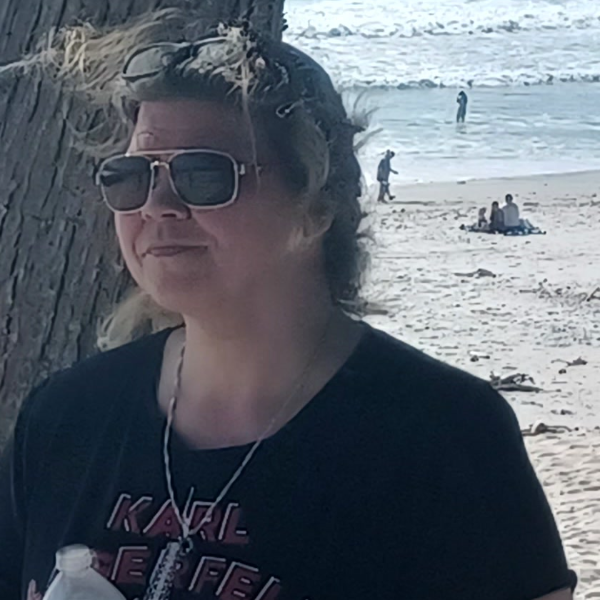

I'm not a sit-still person. Nearly thirty years of nursing will train your body to believe that stillness is the sound right before the bad thing. So no, I'm not going to tell you to empty your mind on a cushion for an hour. I'm going to tell you what I actually do, which is four minutes on whatever front porch I've got — a real one, a tailgate, a curb outside the ER, the step of the rig.
What we found
The practice is embarrassingly simple, which is why it survives. You don't need a cushion. You need four minutes and a place to put your eyes.
- Sit where you can see something that isn't a screen — a tree line, a parking lot, weather. Distance matters; let your eyes focus far away for once.
- Breathe like you're not being graded. In through the nose if you can. Nobody's counting.
- When your brain hands you the to-do list — and it will, mine files hers in triplicate — you don't fight it. You just name one true thing out loud. "I'm tired." "I don't want to go back in there." "I need help with the schedule." Quiet, to nobody.
- Four minutes. Then get up and go be a person again.
Why it might matter
Here's the part that isn't in the meditation apps: the naming is the medicine. Intention spoken clearly becomes connection — first with your own self, then, when you're ready to say it to another human, with the people who could actually help you carry it. Half of what we call overwhelm is just unspoken inventory. The porch is where you speak it.
Intention spoken clearly becomes connection.iNAMS · Mindfulness
What we actually know
What's uncertain, difficult, or personal
If sitting quietly floods you instead of settling you — and for some of us with a trauma history it genuinely does — that's not failure and it's not rare. Keep the eyes-open version, keep it short, or walk while you do it. And if what comes up in the quiet is heavy in a way that scares you, that's a clinician conversation, not a porch project. No shame in either direction.
One honest next step
Tonight or tomorrow, four minutes, any porch you can find. Name one true thing out loud. That's the whole assignment. It's free, like the story — no app, no subscription, no cushion. If a week of porches shows you something you want to actually work on, the notes in this pillar go deeper, and my door's open.
Questions I get asked
Is this meditation?
Close enough to borrow the good parts, different enough that you don't have to identify as someone who meditates. The doctrine name for this pillar is mindfulness — naming things clearly. The porch is just where I do mine.
Four minutes seems too short to do anything.
Four minutes you actually do beats forty you don't. Repeat what works. If your four wants to become ten some evening, nobody will stop you.
Do I have to say it out loud? My neighbors already wonder about me.
Out loud is stronger — there's something about hearing it in your own voice. But a whisper counts. Writing it on paper counts. The point is it leaves your head, because if it lives in your head, it's already costing you.
- Peer-reviewed research on brief breathing practices and acute stress (year). Human-reviewed for this note.
- Peer-reviewed literature on affect labeling (year).
- Reporting on trauma-sensitive adaptations of stillness practices (year). As reported; not independently verified.
Verified means a human decided, on evidence. As-reported claims carry their source and year. This note is education, not medical, legal or financial advice.